Romanticism,
first defined as an aesthetic in literary criticism around 1800, gained
momentum as an artistic movement in France and Britain in the early
decades of the nineteenth century and flourished until mid-century. With
its emphasis on the imagination and emotion, Romanticism emerged as a
response to the disillusionment with the Enlightenment values of reason
and order in the aftermath of the French Revolution of 1789. Romanticism
was partly a revolt against aristocratic social and political norms of
the Age of Enlightenment and a reaction against the scientific
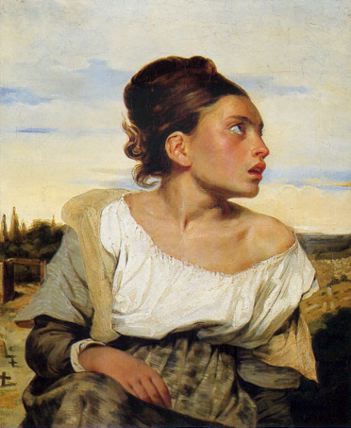
rationalization of nature. Romanticism exalted individualism, subjectivism, irrationalism, imagination, emotions and nature - emotion over reason and senses over intellect. Since they were in revolt against the orders, they favored the revival of potentially unlimited number of styles, anything that aroused them. Romantic artists were fascinated by the nature, the genius, their passions and inner struggles, their moods, mental potentials, the heroes. They investigated human nature and personality, the folk culture, the national and ethnic origins, the medieval era, the exotic, the remote, the mysterious, the occult, the diseased, and even satanic. Romantic artist had a role of an ultimate egoistic creator, with the spirit above strict formal rules and traditional procedures. He had imagination as a gateway to transcendent experience and spiritual truth. Romanticism Art was present in varying degrees in different countries. The painters J. M. W. Turner and John Constable are strong examples of Romanticism art in England. Although Turner was considered a controversial figure in his day, he is now regarded as the artist who elevated landscape painting to an eminence rivaling history painting. The intensity of hue and interest in evanescent light not only placed Turner's work in the vanguard of English painting, but later exerted an influence upon art in France, as well. In predominantly Roman Catholic countries Romanticism was less pronounced than in Germany and Britain, and tended to develop later, after the rise of Napoleon. François-René de Chateaubriand is often called the "Father of French Romanticism". In France, the movement is associated with the nineteenth century, particularly in the paintings of Théodore Géricault and Eugène Delacroix. Romanticism
became popular in American politics, philosophy and art. The movement
appealed to the revolutionary spirit of America as well as to those
longing to break free of the strict religious traditions of early
settlement. Hudson River School was the first American school of
landscape painting active from 1835-1870. The subjects of their art were
romantic spectacles from the Hudson River Valley and upstate New York.
The artist Thomas Cole is synonymous with this region and first leader
of the group. Thomas Cole's paintings feature strong narratives as in
The Voyage of Life series painted in the early 1840s that depict man
trying to survive amidst an awesome and immense nature, from the cradle
to the grave. Other American Romanticism artist included
John James Audubon
and
Winslow Homer.Along with plumbing emotional and behavioral extremes, Romantic artists expanded the repertoire of subject matter, rejecting the didacticism of Neoclassical history painting in favor of imaginary and exotic subjects. Orientalism and the worlds of literature stimulated new dialogues with the past as well as the present. Ingres' sinuous odalisques reflect the contemporary fascination with the exoticism of the harem, albeit a purely imagined Orient, as he never traveled beyond Italy. In 1832, Delacroix journeyed to Morocco, and his trip to North Africa prompted other artists to follow. In 1846, Chassériau documented his visit to Algeria in notebooks filled with watercolors and drawings, which later served as models for paintings done in his Paris studio. |